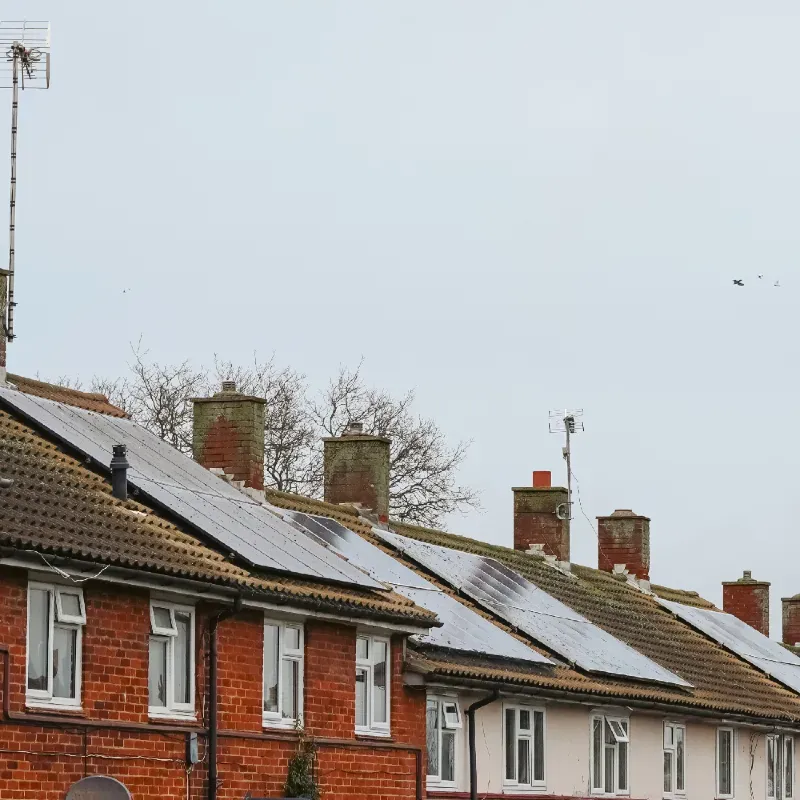
Do solar panels work in the UK's climate?
Choosing solar panels in the UK often raises one key question: do they work in a country known for clouds and rain? The short answer is yes. Modern solar panels perform reliably across the UK and generate electricity throughout the year using daylight rather than direct sunshine. In this guide, we explain how solar panels perform in British weather, how output varies across different parts of the UK, and what this means for homeowners considering solar energy.
The short version
- Solar panels work reliably in the UK because they generate electricity from daylight, not direct sunshine, even in cloudy weather.
- The UK’s cooler climate helps solar panels maintain efficiency by reducing performance losses caused by overheating.
- A typical 4 kW system produces around 3,500–4,200 kWh per year, covering up to 50% of household electricity use, or over 70% with a home battery.
Contents:
- Why solar panels work in cloudy weather
- The UK climate is actually an advantage for solar panels
- Solar performance across the UK
- What affects real-world solar panel performance?
- Is solar energy worth it in the UK?
- Frequently asked questions
- Compare solar panel offers near you
Why solar panels work in cloudy weather
A common misconception is that solar panels only work in hot, sunny climates. In reality, solar panels generate electricity from daylight, not heat. This means they continue producing power whenever there is natural light, even when the sun is hidden behind clouds.
The UK benefits from high levels of diffuse light. This is scattered sunlight that reaches the ground on overcast days and allows solar panels to keep generating electricity consistently, even in cloudy conditions.
The UK climate is actually an advantage for solar panels
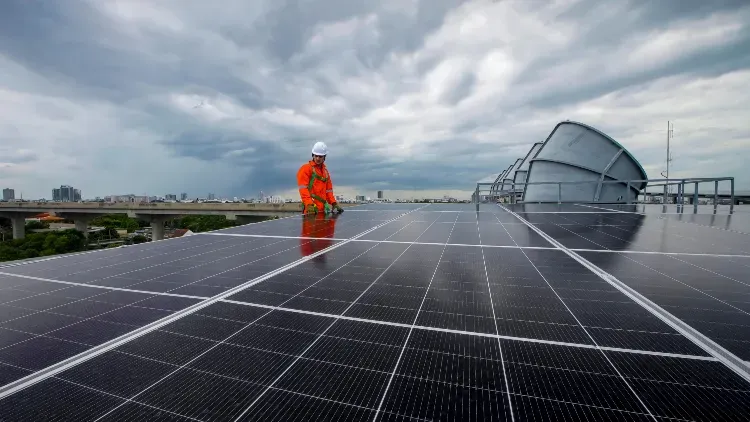
Solar panels perform efficiently in cooler, cloudy conditions.
Solar panels are most efficient at cooler temperatures, typically around 25°C. When panels get very hot, their efficiency drops slightly. This is why extremely hot climates are not always ideal for solar performance.
The UK’s cooler, breezy climate helps panels operate closer to their optimal efficiency for more of the year. While the UK receives less intense sunshine than southern Europe, panels lose less energy to overheating, resulting in more stable long-term performance.
This balance of moderate temperatures and consistent daylight makes the UK well suited to solar energy.
Solar performance across the UK
Solar energy potential varies slightly by region, but data shows that all parts of the UK offer suitable conditions for residential solar panels. Well-designed systems can deliver meaningful electricity generation nationwide.
Regional solar performance overview
Region | Average annual output per kW |
|---|---|
England | ~950–1,050 kWh |
Wales | ~930 kWh |
Scotland | ~890 kWh |
Northern Ireland | ~885 kWh |
Source: Global Solar Atlas
The figures in the table show how much electricity one kilowatt (kW) of solar panels produces in a year. Since most UK homes install around 4 kW, a typical system generates 3,500–4,200 units of electricity annually.
This can cover up to 50% of an average household’s yearly electricity use; with the addition of a home battery, this figure can increase to over 70%.
England
England offers reliable solar performance throughout the year. Southern regions such as Brighton, Bournemouth, Southampton and London benefit from higher sunlight levels, while cities like Birmingham, Manchester, Leeds and Sheffield still achieve strong annual output despite frequent cloud cover.
Across England, typical systems generate close to or above the national average, making solar a practical investment for most households.
Scotland
Despite its reputation for cloudy weather, Scotland performs well for solar energy. Average output is around 890 kWh per installed kilowatt, with cities such as Aberdeen, Dundee and Edinburgh reaching similar or even higher figures.
High levels of diffuse light support consistent generation, and more than 136,000 Scottish homes already use solar panels.
Wales
Wales has excellent conditions for solar power, with average output around 930 kWh per installed kilowatt. Cities like Cardiff, Swansea and Newport often exceed 1,000 kWh annually.
With over 111,000 domestic installations, solar energy is a proven and widely adopted solution across Wales.
Northern Ireland
Northern Ireland offers solid solar performance, with average output close to 885 kWh per installed kilowatt. Belfast performs slightly above the regional average.
More than 30,000 households in Northern Ireland already generate electricity from solar panels.
What affects real-world solar panel performance?
While climate matters, several practical factors have a greater impact on how much electricity a system produces:
- Roof orientation and tilt, with south-facing roofs generally performing best
- Shading from trees, chimneys or nearby buildings
- System design, including inverter quality and panel layout
- Installation quality, which affects efficiency, safety and lifespan
A professional installer will assess these factors and design a system that performs well even if conditions are not perfect.
Is solar energy worth it in the UK?
For most households, yes. While winter months produce less electricity, solar panels still generate power year-round. During spring and summer, many systems produce more electricity than a household uses during the day.
With electricity prices remaining high, solar panels can reduce reliance on the grid and provide long-term savings.
Frequently asked questions
Do solar panels work in winter?
Yes. Solar panels continue working in winter as long as there is daylight. Output is lower than in summer, but systems still generate useful electricity.
For example, a typical 4 kW home solar system might generate around 2–5 kWh of electricity on a winter day, depending on daylight hours and weather.
Adding a home battery allows households to store excess solar energy generated earlier in the day and use it in the evening, helping maximise self-consumption even during darker months.
Do solar panels need direct sunlight?
No. Solar panels generate electricity from daylight rather than direct sunshine, which is why they continue working on cloudy days.
Are solar panels effective in northern parts of the UK?
Yes. Data from Scotland and Northern Ireland shows that solar panels deliver reliable annual output despite higher cloud cover.
How long do solar panels last in UK weather?
Most modern solar panels last between 25 and 40 years and are designed to withstand rain, wind, frost and temperature changes.
Do I need planning permission for solar panels?
In most cases, no. Solar panels are usually classed as permitted development for houses. Planning permission may be required for listed buildings or conservation areas.
Compare solar panel offers near you
Nettbureau is a free comparison platform that connects homeowners with trusted, MCS-certified solar panel installers across the UK.
Fill out the form to receive offers from local installers. They will propose different panel technologies and system designs so you can compare options and choose the best value for your home.
Pick the best offer
You can easily compare the offers and find out what is most important to you.
All you need to do is fill out our short form with your needs.

Save the environment
Investing in solar energy is an environmentally friendly measure that saves the environment whilst simultaneously lowering your electricity bills.

Free and non-binding
It's free and non-binding to receive offers through Solarenergy.co.uk.
If you're not satisfied with any of the offers, you can easily decline them all.

Save time
Skip the hassle of chasing companies that offer good solar energy systems. Let the suppliers come to you instead.
Save money
Get offers from up to four competing solar suppliers and choose the one that meets your needs the most.
Free and non-binding
Choose whether you want to accept an offer or not. If you're not happy with any of them, you're free to decline them all.
Our awards