Monocrystalline vs polycrystalline solar panels: what is the difference?
Choosing between monocrystalline and polycrystalline solar panels can be confusing. This guide explains the difference between these two types, including how they work, their efficiency, space requirements, and real-world performance.
This way, you can confidently choose the right solar panels for your home.
Fill out the form
Tell us your solar panel needs and details about your property so we can match you with eligible suppliers.
Get contacted
Our partners will contact you directly with a phone call, text message, and an email to give offers based on the information you provided.
Make your decision
Once you’ve heard all offers, you are free to choose the one which suits your needs the best.
What are monocrystalline solar panels?
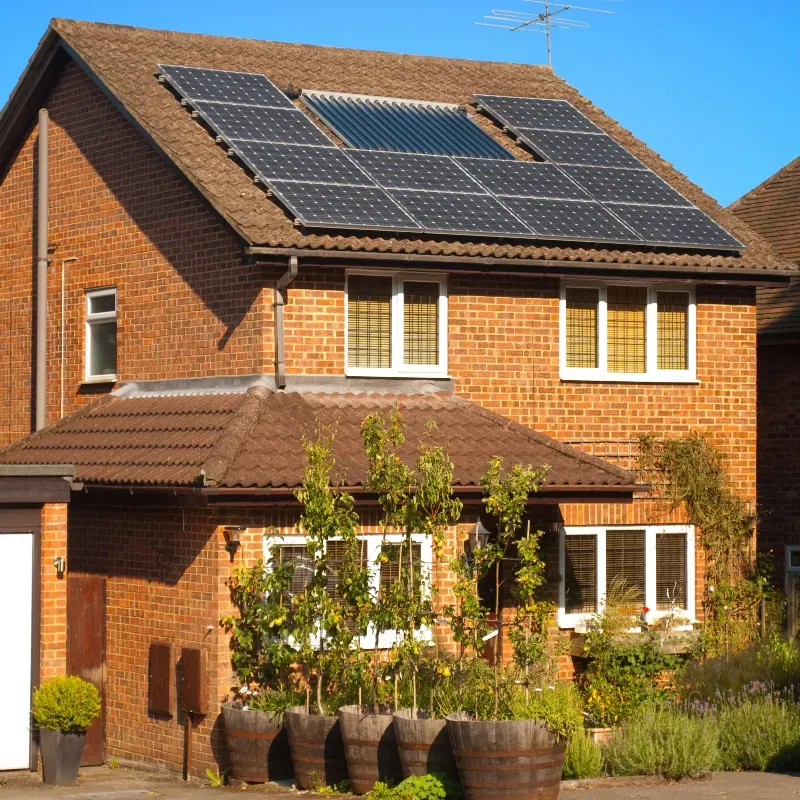
Monocrystalline solar panels are high-efficiency solar modules made from a single, pure silicon crystal. Because the cell is formed from one continuous crystal, electricity can move more freely through the material.
This significantly increases the efficiency of monocrystalline solar panels compared to panels made from multiple crystals. Newer monocrystalline panels use improved cell designs that help reduce energy losses and keep performance more stable over time.
Key characteristics:
- Cost: typically approx. £190 per panel
- High efficiency: typically converts 15–24% of sunlight into electricity in modern residential systems
- Appearance: uniform black, discreet design
- Lifespan: commonly 25–40 years
In energy terms, converting around 20% of sunlight into electricity is actually very efficient.
For comparison, even modern LED light bulbs typically convert less than 15% of the energy they use into visible light, with the rest lost as heat.
What are polycrystalline solar panels?
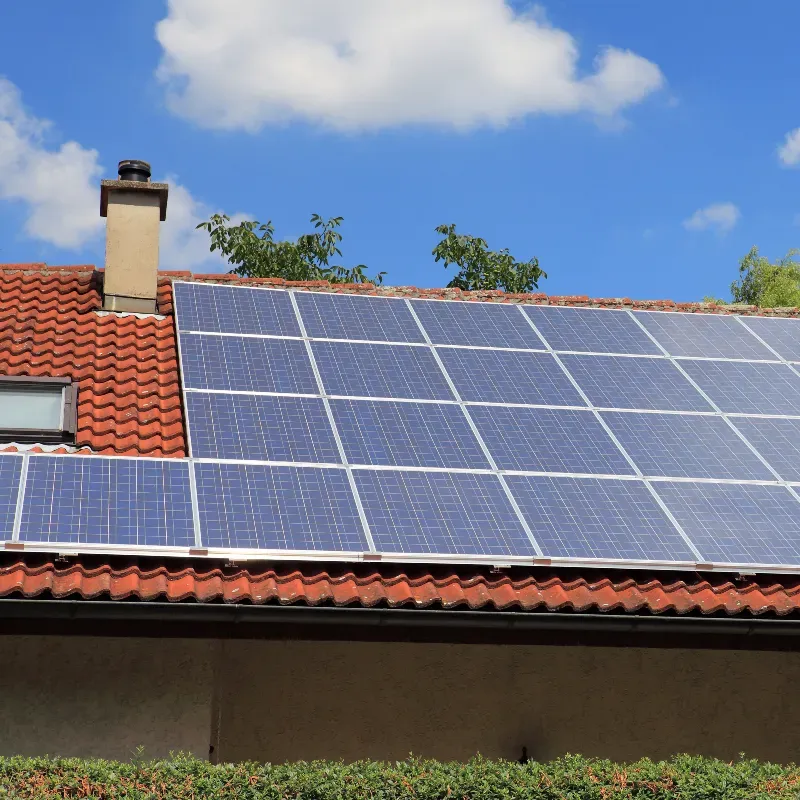
Polycrystalline silicon solar panels are made by melting together multiple silicon fragments and casting them into blocks before slicing them into cells.
This multi-crystalline structure makes production faster and cheaper, but it slightly restricts how electricity flows through the panel, resulting in lower efficiency.
Polycrystalline panels usually have a blue, speckled or marbled appearance. In 2026, they are less common in new UK residential installations but remain a reliable option for larger roofs or ground-mounted systems.
Key characteristics:
- Cost: typically approx. £165 per panel
- Efficiency: typically 13–16%
- Appearance: blue, speckled or marbled
- Lifespan: usually around 25 years
Monocrystalline vs polycrystalline solar panels
Feature | Monocrystalline | Polycrystalline |
|---|---|---|
Efficiency | Higher (typically 15–24%) | Lower (typically 13–16%) |
Roof space required | Less roof space needed | More roof space needed |
Low-light performance | Generally better | Slightly lower |
Typical price starts from | Approx. £190 per panel | Approx. £165 per panel |
Typical system cost | Starts from approx. £6,400 (4kW) | Starts from approx. £4,800 (4kW) |
Typical use in the UK | Standard choice for residential installs | Less common in new residential systems |
What matters most for real-world performance
Panel efficiency alone does not determine how much electricity your system will generate. Real-world performance depends on several practical factors:
- Roof orientation and tilt: South-facing roofs usually perform best in the UK, but east–west systems can still deliver strong results
- Shading: Even partial shade can significantly reduce output if not properly managed
- Inverter quality: The inverter is critical for converting solar energy into usable electricity
- Installer expertise: System layout and installation quality directly affect performance, safety, and lifespan
How mono and poly panels compare to other technologies
When researching photovoltaic vs monocrystalline solar panels, it is important to understand that monocrystalline panels are simply one type of photovoltaic (PV) technology. You may also encounter other technologies.
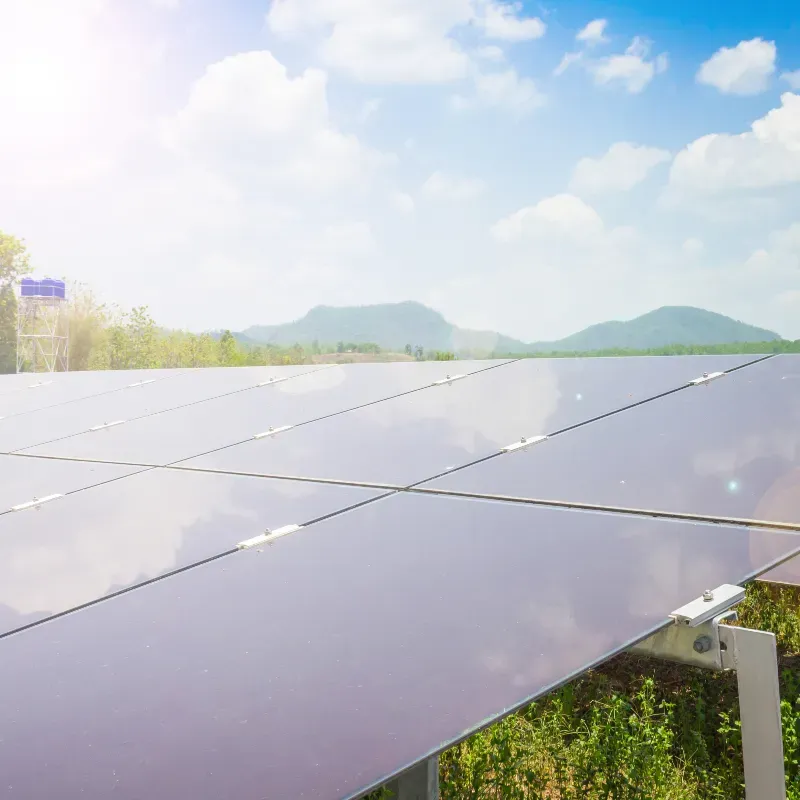
Thin film solar panels vs monocrystalline
Thin film solar panels are lighter and more flexible than standard panels, which can make them useful for unusual surfaces. However, they usually produce less electricity, so you need much more space to get the same output as monocrystalline panels.
Bifacial solar panels vs monocrystalline
Bifacial solar panels can generate electricity from both the front and the back of the panel. This can increase output in certain installations, but they are usually used in larger or more specialised projects rather than typical homes.
Are N-type solar panels monocrystalline?
Yes. Most newer high-performance solar panels are still monocrystalline at their core. “N-type” simply refers to a newer design that helps some monocrystalline panels work a little more efficiently and last longer.
Frequently asked questions
Are monocrystalline solar panels the best choice?
For many UK homes, yes. Monocrystalline solar panels are usually the best option where roof space is limited or higher efficiency is important, while polycrystalline panels can still be a cost-effective choice for larger roofs or non-residential projects.
Do solar panels work in UK weather?
Yes. Modern solar panels generate electricity from daylight rather than direct sunshine, so they continue working on cloudy days.
While output is lower in winter, a well-designed system can still generate useful electricity throughout the year in the UK.
Do I need planning permission for solar panels?
In most cases, no. Solar panels are usually classed as permitted development for houses in the UK. Planning permission may be required for listed buildings, flats or properties in conservation areas.
Are there any grants or subsidies for solar panels?
Solar panel installations currently benefit from 0% VAT, which helps reduce upfront costs.
Homeowners can also earn payments for surplus electricity exported to the grid through the Smart Export Guarantee (SEG), provided the system is installed by an MCS-certified installer.
How much does a solar panel system cost in the UK?
A typical residential solar panel system usually costs between £6,000 and £10,000+, depending on system size, roof type, panel choice and whether battery storage is included.
Comparing multiple offers is the best way to understand what represents good value for your home.
Compare solar panel offers near you
Nettbureau is a free comparison platform that connects homeowners with trusted solar panel installers.
Fill out the form to receive offers from local installers. They will propose different panel technologies and system designs so you can compare options and choose the best value for your home.
Pick the best offer
You can easily compare the offers and find out what is most important to you.
All you need to do is fill out our short form with your needs.

Save the environment
Investing in solar energy is an environmentally friendly measure that saves the environment whilst simultaneously lowering your electricity bills.

Free and non-binding
It's free and non-binding to receive offers through Solarenergy.co.uk.
If you're not satisfied with any of the offers, you can easily decline them all.

Save time
Skip the hassle of chasing companies that offer good solar energy systems. Let the suppliers come to you instead.
Save money
Get offers from up to four competing solar suppliers and choose the one that meets your needs the most.
Free and non-binding
Choose whether you want to accept an offer or not. If you're not happy with any of them, you're free to decline them all.
Our awards